Porsche
One truth Porsche has owned since 1975, told five ways. There is nothing like a Porsche.
The brief
Porsche needs no introduction, and that is the hardest thing about writing for it. How do you say something new about a car the whole world already knows?
We started with how we see the brand. There are cars, which take you from one place to another, and there is Porsche. A Porsche is not transport. It is a precise, obsessively engineered machine, German engineering at its most exacting, built to be the most car a car can be. Pleasure, thrill and refinement in one object, and something harder to name that makes it feel alive.
So the campaign says one thing, five ways: there is nothing like a Porsche. It is not a comparison. It is a statement of fact, and each execution proves it from a different side: the heritage, the machine, the ownership, the shape and the character.
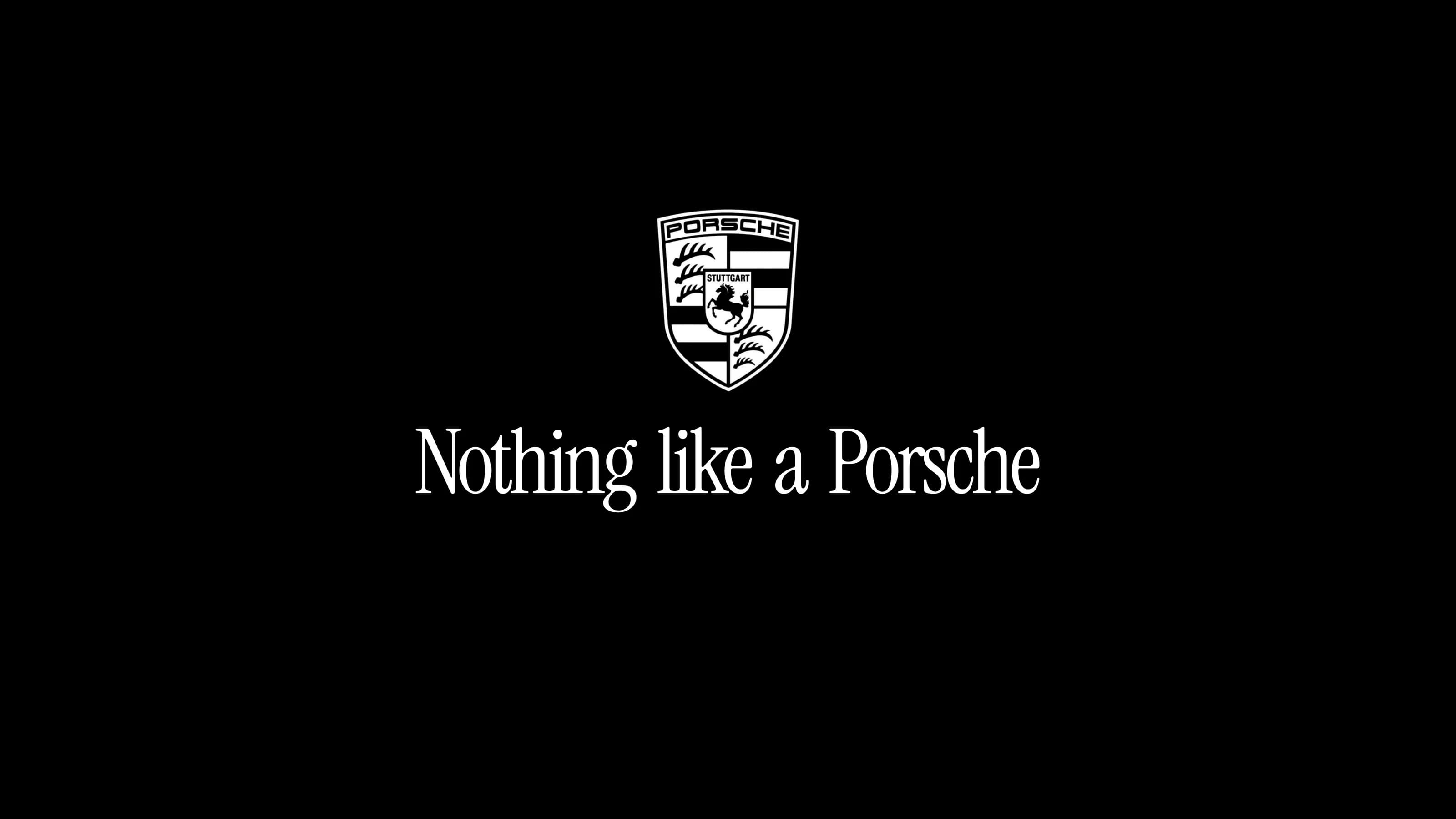
The key visual is as spare as we could make it: the crest, the line and black. Luxury rarely raises its voice, and a brand this sure of itself does not need to.
The Blueprint
The idea is not new, and that is deliberate. In 1975 Porsche took a journalist’s verdict, that a Porsche is like no other car, and made it a line of its own: There is no substitute. It became one of the most enduring lines in car advertising, and Porsche still comes back to it today.
Nothing like a Porsche is that same truth, said the way people say it now. Rather than hand Porsche a new idea, we gave its oldest idea new pictures.
Three rules came before any image was made:
- One line, everywhere. Every execution ends on the same words, so the campaign builds one memory instead of five.
- Never name the competition in the copy. The pictures can do the comparing. The line only has to state the fact.
- Restraint. The crest, one serif line and room to breathe. The cars carry the colour.
The brand
Porsche’s identity is strong enough to need very little help. The campaign borrows two things from it and adds three of its own.
- The crest. At its centre is a rearing horse taken from the coat of arms of Stuttgart, a city whose name comes from a ducal stud farm. The crest has marked Porsche cars since 1952. The horse is where the first execution begins.
- The shape. Porsche’s designers call the sweep of the 911’s roofline the flyline, and its basic character runs through every generation of the car. It is the brand’s most valuable asset, and it carries the fourth execution on its own.
- The line. Set in a tall, narrow serif, always in white and always low in the frame, so it reads like a signature rather than a headline.
- Orange. The colour thread through the campaign. In the GT3 and among the sheep, the Porsche is the orange thing. Colour does what the copy refuses to: it singles the car out.
- The small print. Every frame carries its own disclaimer. This is spec work, and it says so on the image itself.
The ad
Five executions. Each proves the line from a different side.
Dakar 911
The Porsche 911 Dakar exists because of a win. In 1984 a 911 built for the Paris-Dakar rally, the 953, driven by René Metge with Dominique Lemoyne, took Porsche’s first overall victory in the event. It was the first time a sports car had won it, and the birth of all-wheel drive in the 911. Two years later the 959 finished first and second.
In 2022 Porsche answered that history with the 911 Dakar: raised 50 mm above a Carrera with sports suspension, with a lift system that adds 30 mm more, and built in a run of 2,500 cars. Its optional Rallye Design Package revives the look of the 1984 winner in white and Gentian Blue, reworked with the word Roughroads.
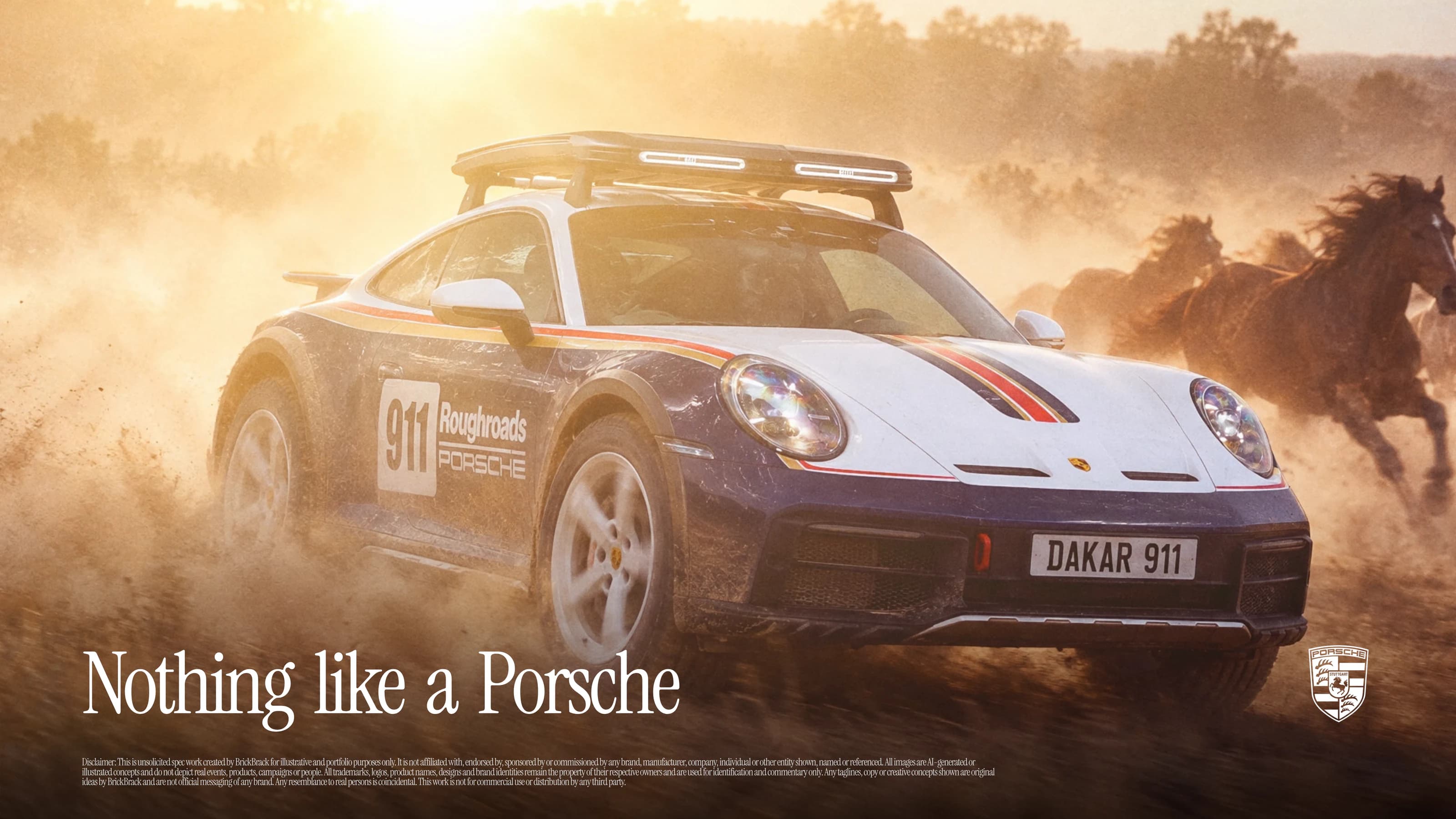
Our visual puts that car in the dust beside a herd of wild horses. The horse already rides on the badge. Here the car runs with the real thing and keeps pace. It says the 911 Dakar is alive the way they are: unbroken, unfenced and made for open ground.
We chose this frame for its human imperfection. The dust hangs unevenly, the light flares across the lens and the horses are mid-stride and out of step, exactly as a photographer on the ground would have caught them. The car is sharp and heroic, the horses feel alive, and the composition leaves the lower left clear for the line.
911 GT3
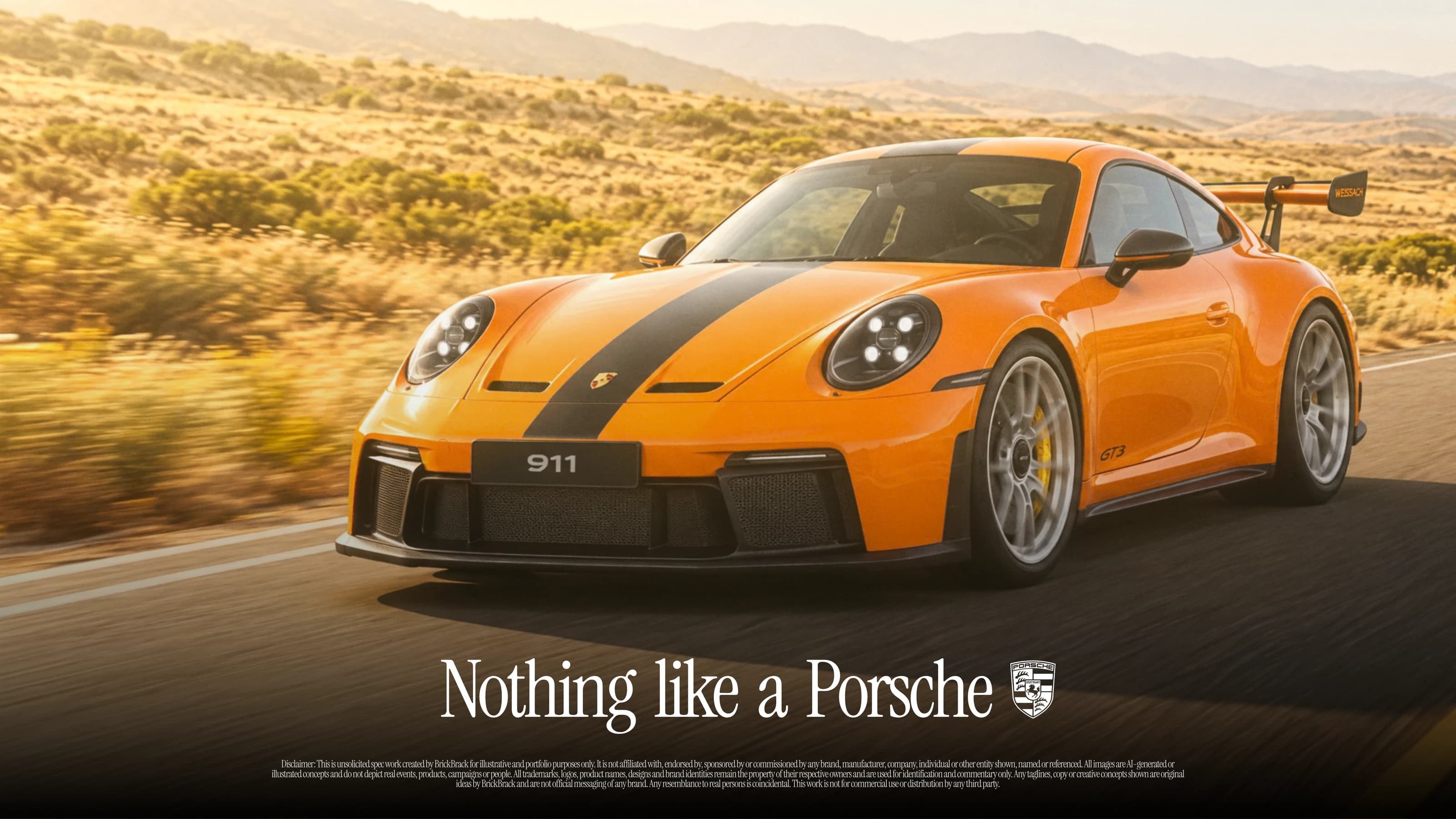
Where the Dakar is Porsche off the road, the GT3 is Porsche at its purest on it: a naturally aspirated 4.0-litre flat-six that revs to 9,000 rpm and makes 510 PS, now offered for the first time in the 911 GT3 with the track-focused Weissach package.
We specified our car on Porsche’s own online configurator, so the car in the picture starts from a specification a customer could order, then generated it on an open road through dry hills.
Why orange? Because in this campaign the Porsche is always the first thing you see. In a frame full of gold grass and pale sky, the car is the warmest, most saturated thing in it, and the eye goes straight to it. The black centre stripe and the Weissach script on the wing say track car without a word of copy.
The speed is in the frame, not in the car. The road and the hills streak past while the GT3 stays pin-sharp: the feeling of a GT3 at full stretch, held still for one frame. The line sits beneath it, and it has nothing left to prove.
The missing Porsche
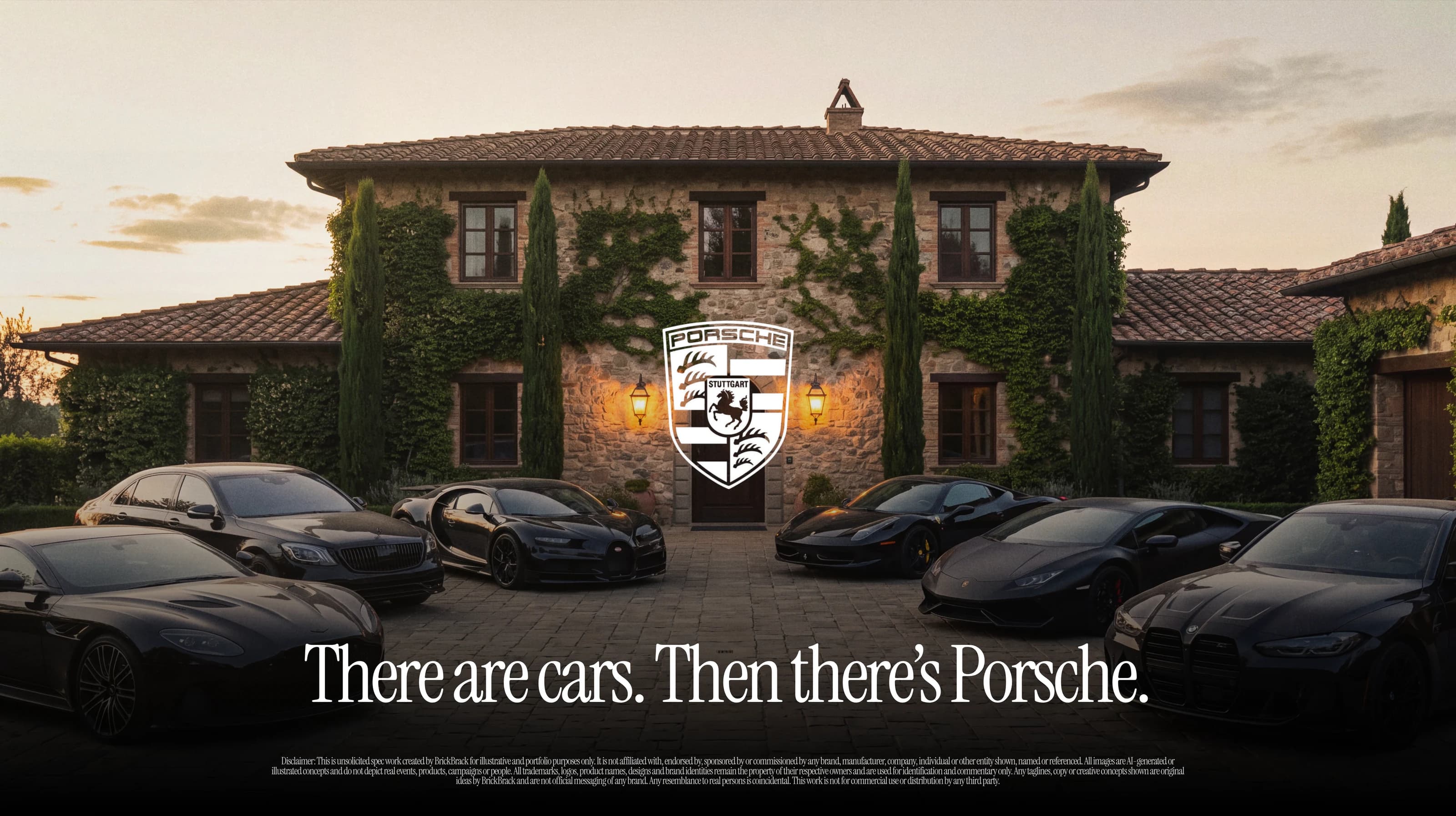
A driveway at dusk, and six cars most people would be glad to own: a Bugatti Chiron, a Ferrari 458 Italia, a Lamborghini Huracán, an Aston Martin DBS, a Mercedes-Maybach S 680 and a BMW M4 Competition. Some are faster than a 911. Some cost several times as much. Some sit a tier or two above it.
The Porsche crest glows above the door, but there is no Porsche in the drive. It is out. A Porsche does not belong in a driveway. A Porsche is driven.
The picture was fixed. The only question was the line. We wrote five, and kept two.
Engineered to be driven. Not chosen. With six parked cars in shot and no Porsche, the reader has to decide who the line is about, and the nearest answer is the cars in front of them. A line that can be read as praise for the competition cannot close a Porsche ad.
There are cars. Then there’s Porsche. Chosen as A. It divides the world in two and puts Porsche alone on one side. Six extraordinary cars become simply cars, and the missing Porsche becomes the point.
Cars are fun, but a Porsche is Porsche. Chosen as B. It concedes what is true, that the cars in the frame are fun and that some are faster or dearer, then refuses to compare. You can buy more speed or a higher price. You cannot buy what makes a Porsche a Porsche.
Porsche is a Porsche. Not chosen. B says the same thing with a contrast to push against. On its own the line is circular and gives the reader nothing to hold.
Porsche is driven, not parked. Not chosen. It explains the picture instead of adding to it. The empty space in the drive already tells you the Porsche is out, so a line that repeats it spends the last word on something the reader has already seen.
The two finalists work the same frame from opposite sides. A sets Porsche apart from everything else. B lets the others be good, and makes Porsche something else entirely. The image is identical in both, so the line is the only thing being tested.
Which line would you run?
Vote A or B.
There are cars. Then there’s Porsche.
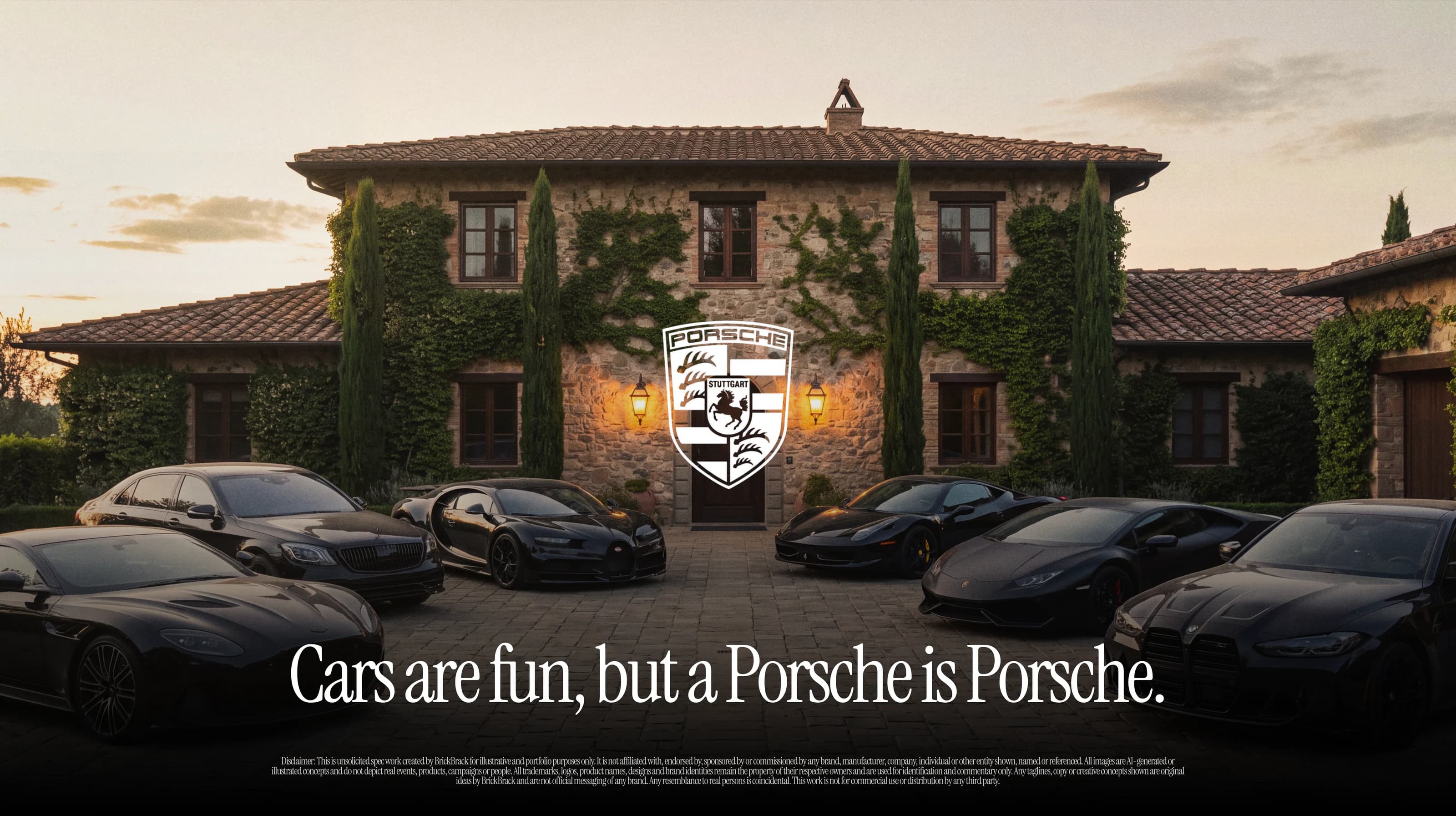
Cars are fun, but a Porsche is Porsche.
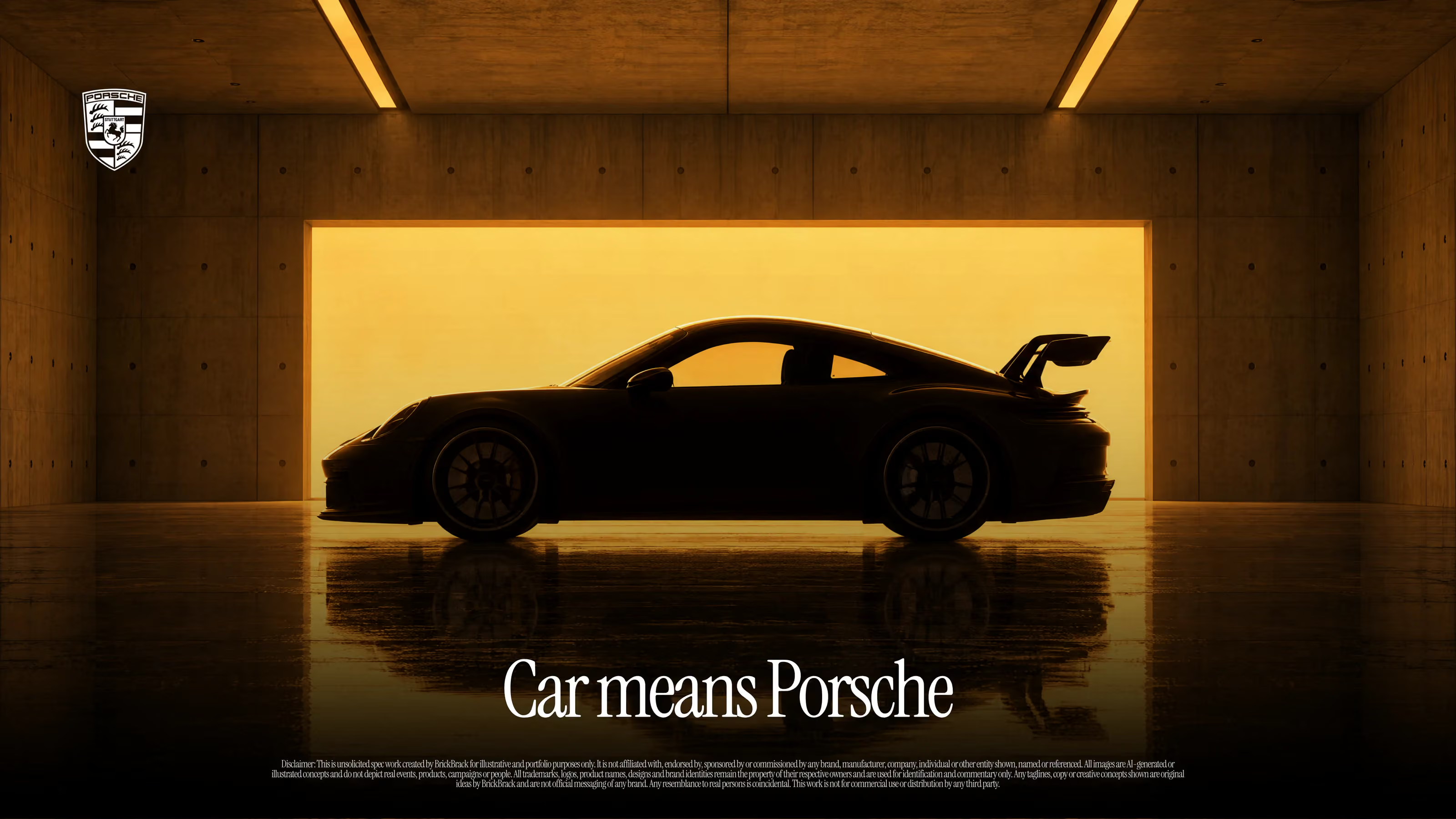
Car means Porsche
This execution rests on something most people will recognise. Ask someone to draw a car in a single line and what comes out is a low nose, a short cabin and a roof that falls away in one unbroken curve to the tail. That is the outline of a 911.
Psychologists have a name for why. In the 1970s Eleanor Rosch showed that we do not hold categories as lists of rules. We organise them around a best example, the member that feels most typical of the group, which is why a robin feels more like a bird than a penguin does. That best example is called the prototype.
The 911 has had more than sixty years to become the prototype of the car. Most shapes change with every model. This one has stayed recognisably itself since 1963, a single bloodline carried through eight generations. Hold a shape still for that long and it stops belonging to one car. It starts to stand for the idea itself.
So the frame shows nothing but the outline, backlit in a bare concrete room, with the crest in the corner and no badge on the body. We did not draw a Porsche. We drew a car. It simply happens to be a 911.
The goat of all cars
A pun on the GOAT, the greatest of all time, carried through a flock. The picture is the same in both versions: one orange Porsche parked among the sheep. Only the headline changes, and with it the animal the car becomes.
The orange sheep is the lead. Everyone knows the black sheep, the one that refuses to blend in with the flock. We changed one word. The Porsche is the one animal in the field no one could mistake for the others, and orange keeps the campaign’s colour thread running. It works through recognition: a familiar idiom with a single word swapped asks the reader to finish the thought, and completing a thought yourself is part of what makes a line stay with you. It flatters the owner as someone who chose to stand apart.
The Wolf is the alternative. A wolf among sheep is the other kind of standing out. Not different, but dangerous. The same picture becomes a statement about performance and appetite: a predator parked politely in the flock, waiting. It works through tension rather than charm, and it speaks to the driver more than the owner.
The orange sheep sells belonging to a very small club. The Wolf sells what the car does to everything around it.
Which headline would you lead with?
Vote A or B.
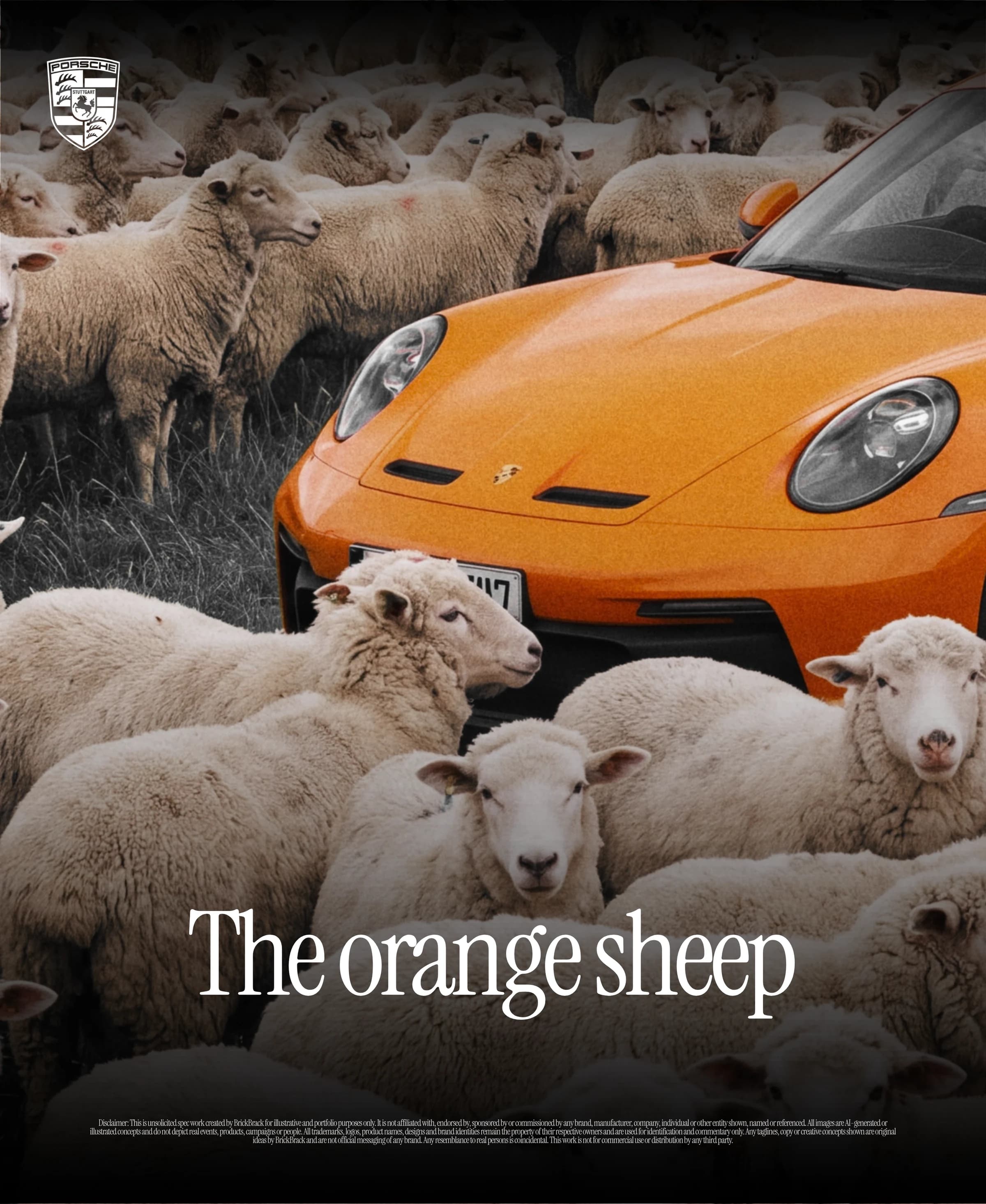
The orange sheep
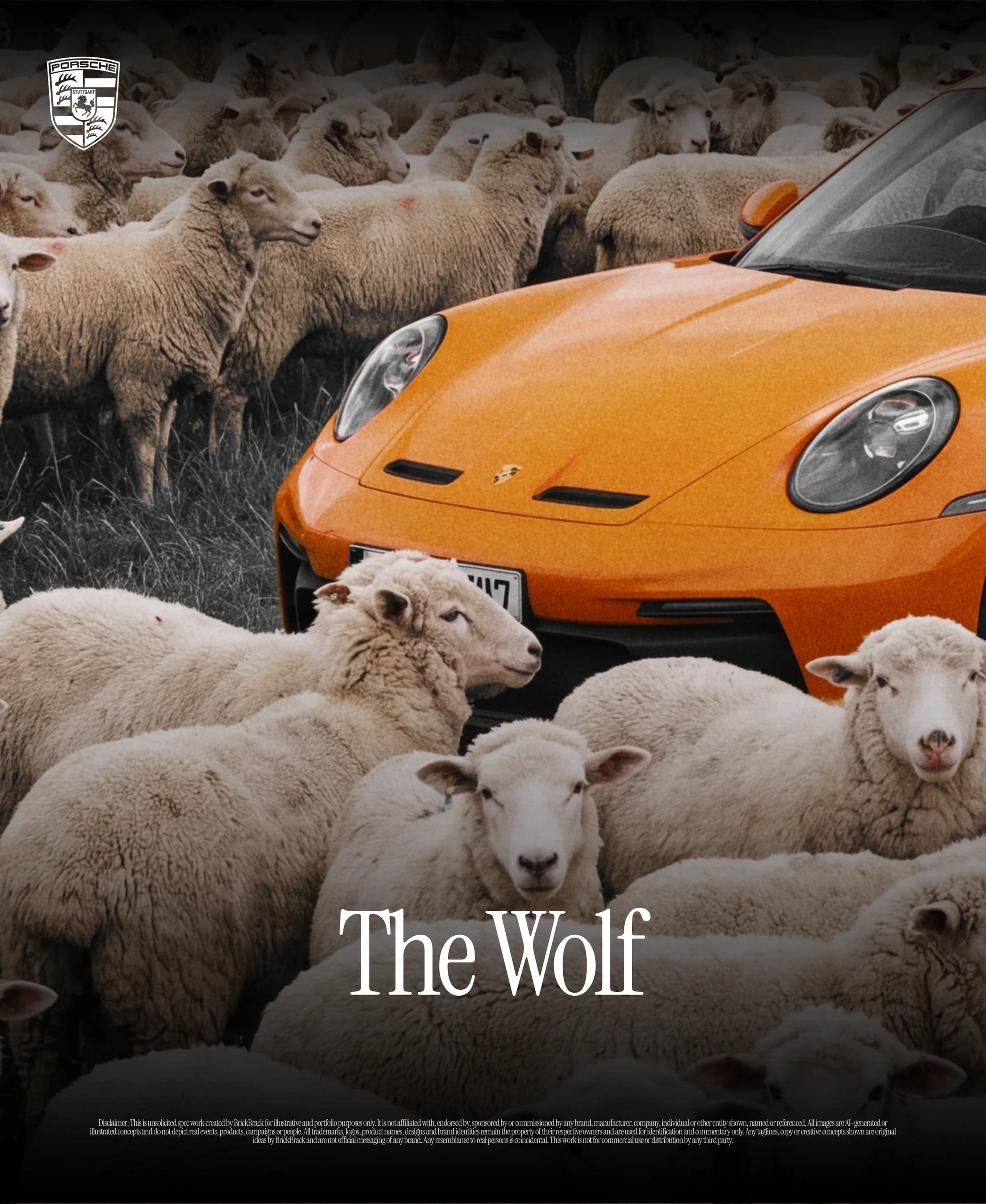
The Wolf
The amplification plan
Plan, not results
How we would run it:
- Launch on the key visual alone. The crest, the line and black, in print and out of home, before a single car appears. It introduces the line as a statement of fact.
- Release one execution at a time. Each proves the line from a new side: the heritage, the machine, the ownership, the shape and the character.
- Settle both copy choices by testing, not taste. The two driveway lines and the two sheep headlines run as paired ads to matched audiences with identical images, so the line is the only thing that changes. The polls on this page are the first, informal round of that test.
- Measure what the line is for. Recall of the line itself, preference between each pair, and saves and shares for every execution.
Behind the build
Every image in this campaign is AI-generated or illustrated. We specified the GT3 on Porsche’s own configurator and built each scene around the car, then chose one frame for every execution. The two driveway frames share one image, and so do the two sheep frames, so each pair differs by its line alone.
Each frame carries this notice in small type. Here it is in full, for anyone reading at a size where the image cannot show it:
This is unsolicited spec work created by BrickBrack for illustration and our portfolio. It is not affiliated with, endorsed, sponsored or commissioned by Porsche or by any other brand, manufacturer, company or person shown or named. All images are AI-generated or illustrated concepts and do not depict real events, products, campaigns or people. All trademarks, logos, product names, designs and brand identities belong to their owners and are used here for identification and commentary only. The taglines and creative concepts are BrickBrack’s own and are not the official messaging of any brand.
Sources:
- Porsche, Porsche. There is no substitute, 13 July 2025.
- Porsche Newsroom, The new Porsche 911 Dakar, 17 November 2022.
- Porsche, The story of the Porsche 911 that won the 1984 Paris-Dakar rally.
- Porsche Newsroom, Porsche preserves the history of the 959 Paris-Dakar, 2023.
- Porsche Newsroom, Double premiere: the new 911 GT3 and 911 GT3 with Touring package, 18 October 2024.
- Porsche, The fascinating story of the Porsche logo.
- Porsche Newsroom, For eternity, 2019.
- Eleanor Rosch, Cognitive representations of semantic categories, Journal of Experimental Psychology: General, 104 (3), 192 to 233, 1975.